Palak Paneer
A creamy, garlicky spinach with seared paneer — the kind of dish you build a whole meal around.
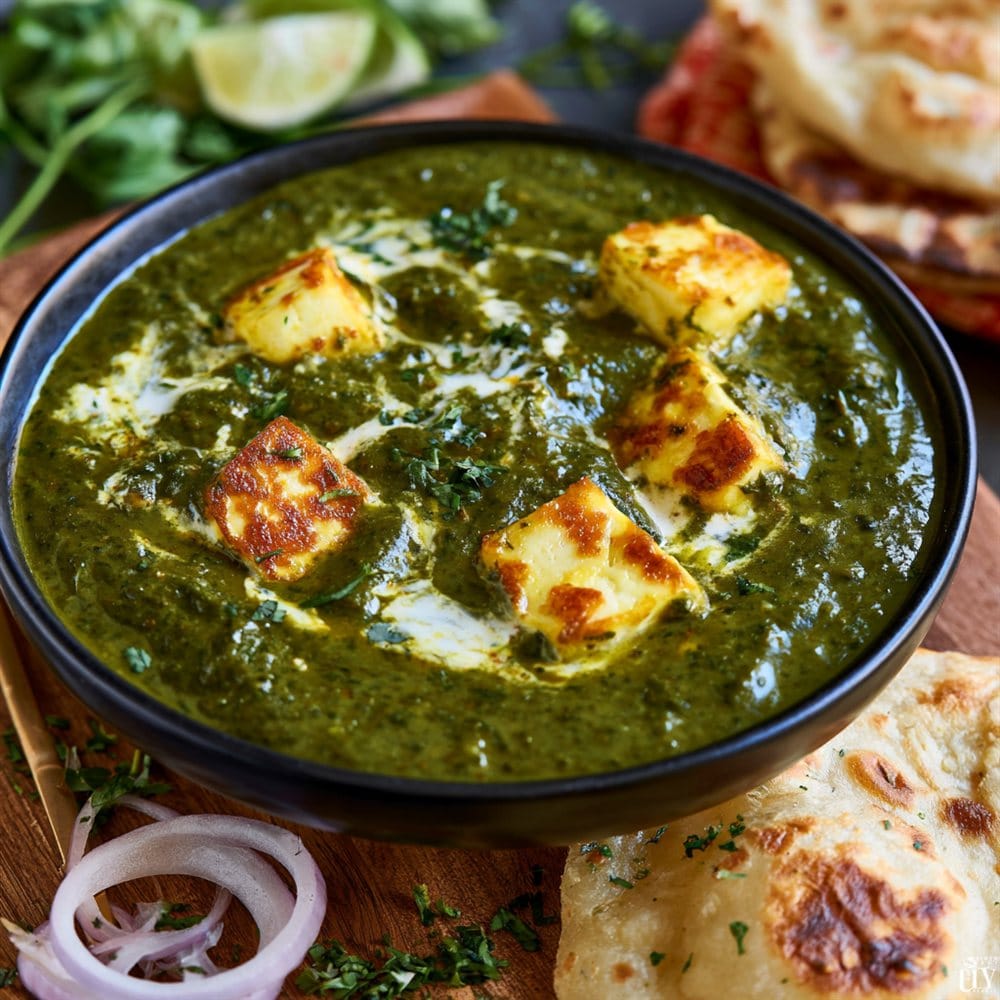
My mother's palak paneer was the first dish I really, specifically missed when I moved away from home. Not in a generic "food from childhood" way. I missed her version — the bright, almost grassy green of the gravy, the paneer cubes with a little sear on them still warm from the pan, the unmistakable hit of kasuri methi that you could smell from the other room before you sat down.
Most palak paneer in the world is darker than it should be. The spinach gets cooked too long, the chlorophyll cooks itself to death, and what should be a vivid forest green ends up the dull, sad olive that I associate with bad American Indian buffets and steam-table sadness. The fix is so simple it almost feels like cheating: blanch the spinach for thirty seconds, no more, then shock it in ice water before you blend it. The color stays where it should. I asked my mother about this technique once, expecting some long explanation about heat and chlorophyll. She said, "Beta, you don't cook leaves for that long. You cook them. You don't kill them." That's been the framework ever since.
The other non-negotiable is kasuri methi at the very end. A pinch — crushed between your palms over the pot so the oils release — is what makes the dish taste unmistakably Indian. Skip it and you have a perfectly fine spinach curry. Add it and you have palak paneer, which is a different thing.
This is the version I make at home, scaled to a small apartment kitchen and a single pan. It comes together in forty-five minutes and goes with basically everything — roti, naan, rice, even a piece of toast if it's late and you're alone.
Cooking tips
Blanching the spinach for just thirty seconds — then shocking it in ice water — locks in the color and keeps the gravy bright.
Searing the paneer cubes before they go into the sauce gives them flavor and keeps them from turning spongy.
Cooking the onions until deeply golden, not just translucent, builds the savory foundation the dish needs.
Crushing the kasuri methi between your palms right before adding it releases its oils and unlocks that signature aroma.
Ingredients
- 1 pound (about 450g) spinach, stems removed
- 8 oz (about 225g) paneer, cut into 3/4-inch cubes
- 2 tablespoons ghee or neutral oil, plus more for searing
- 1 medium yellow onion, finely chopped
- 4 garlic cloves, smashed
- 1-inch piece ginger, grated
- 1 green chile, sliced (or to taste)
- 1 teaspoon ground cumin
- 1 teaspoon ground coriander
- 1/2 teaspoon turmeric
- 1/2 teaspoon garam masala
- 1/4 cup heavy cream or full-fat yogurt
- 1 teaspoon dried fenugreek leaves (kasuri methi), crushed in your palm
- Kosher salt
- Hot water, as needed
Method
1. Blanch the spinach
Drop the spinach into salted boiling water for 30 seconds, then plunge into ice water. Squeeze out as much liquid as you can. Blend with a small splash of water until smooth.
2. Sear the paneer
Heat 1 tablespoon ghee in a wide skillet over medium-high heat. Sear the paneer cubes until lightly browned on two sides, about 3 minutes. Set aside.
3. Build the base
Add the remaining ghee. Cook the onion until soft and edges are browning, 6 to 8 minutes. Stir in the garlic, ginger, and green chile and cook 1 more minute.
4. Bloom the spices
Stir in the cumin, coriander, and turmeric. Toast 30 seconds. Pour in the spinach puree with 1/4 to 1/2 cup hot water. Season aggressively with salt.
5. Finish
Simmer 5 minutes. Stir in the cream, garam masala, and kasuri methi. Return the paneer to warm through. Taste and adjust salt.
6. Serve
With roti, naan, or basmati rice.
A note: No paneer in the fridge? Firm tofu, seared the same way, makes a great vegan version — my older sister has been doing it that way for years and the results are excellent. Kasuri methi keeps for months in the pantry; if you're cooking Indian food more than once a month, get a small bag from any Indian grocery. You'll find a dozen uses for it before the bag runs out.