Dal Makhani
Black urad and rajma simmered slow with butter and cream until everything melts together.
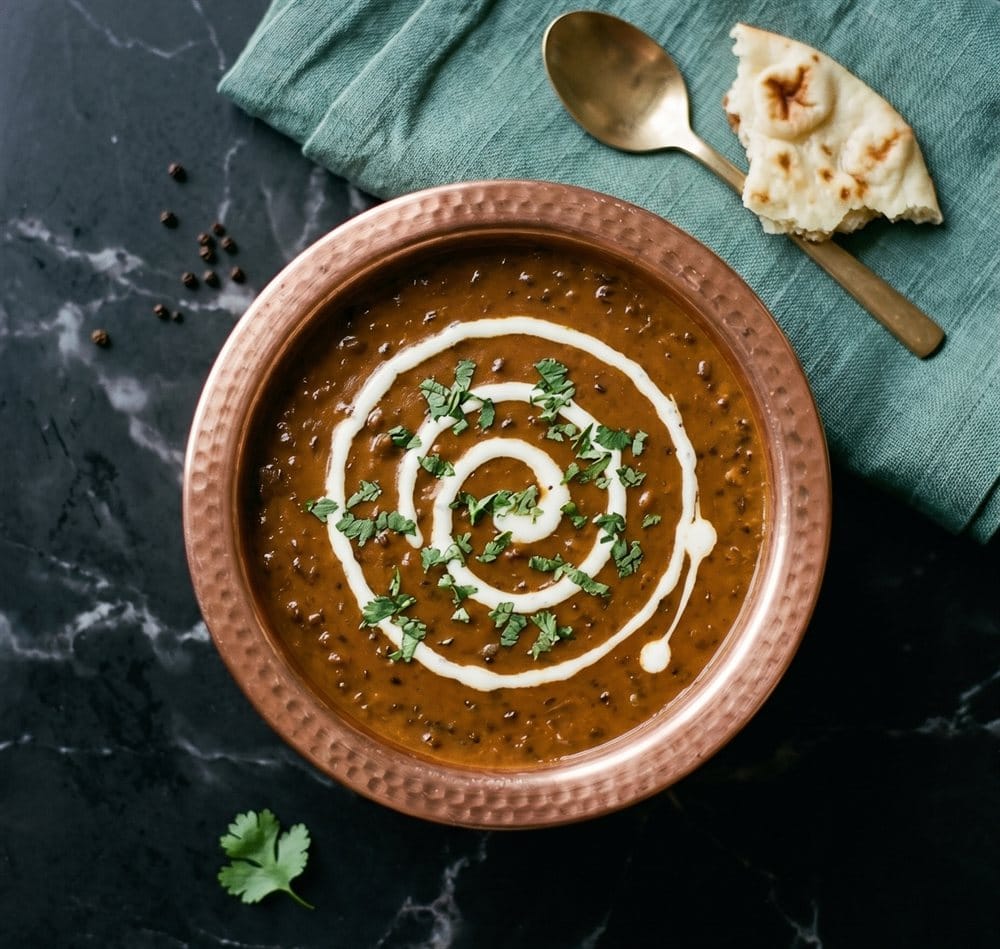
My grandmother on my mother's side — Biji, in Punjabi family-speak — had exactly one dish that she considered hers and would not let anyone else touch: dal makhani. The pot would go on the stove first thing in the morning, on the lowest possible heat, and stay there all day. She'd walk by every twenty minutes, lift the lid, stir, taste, walk away. By dinnertime the kitchen smelled like a Punjabi roadside dhaba, and the dal was so dark and rich it was almost meaty, the lentils long since collapsed into something halfway between a stew and a sauce.
I asked her once what her secret was. She said, "Time. I have it, the dal needs it. That's all." Which is both annoying as advice and exactly correct.
At home, in a normal-sized apartment, with a normal-sized life, I don't have eight hours to babysit a pot. A pressure cooker plus a forty-five-minute final simmer covers most of the distance. It's not Biji's. But it's close enough that I make it once every couple of months and feel deeply satisfied every single time. The first bowl is good. The leftovers, two days later, are better.
The cream and butter, despite the name, aren't really the point of this dish — they go in at the end as a flourish, a kind of velveting agent. The real point is the long, slow cook that breaks down the urad until it loses its shape entirely and becomes part of the sauce. That's what gives dal makhani its signature darkness, its creaminess, and its almost smoky depth. Cream you can add anytime. Time you can't fake.
Cooking tips
Soaking the urad and rajma overnight cuts the cooking time significantly and ensures the beans cook evenly.
Pressure-cooking the lentils first builds the base; the long, low simmer afterward is what develops the deep color and texture.
Mashing some of the urad against the side of the pot during the simmer thickens the dal and creates that creamy, restaurant-style consistency.
Adding cream, butter, and kasuri methi at the very end keeps their flavors fresh rather than letting them dull through long cooking.
Ingredients
- 1 cup whole black urad (sabut urad), soaked overnight
- 1/4 cup red kidney beans (rajma), soaked overnight
- 3 tablespoons unsalted butter, plus more to finish
- 1 tablespoon neutral oil
- 1 large yellow onion, finely chopped
- 1 1/2 tablespoons ginger-garlic paste
- 1 green chile, slit
- 2 medium tomatoes, pureed (or 1 cup canned crushed)
- 1 1/2 teaspoons Kashmiri chile powder
- 1 teaspoon ground cumin
- 1 teaspoon ground coriander
- 1/2 cup heavy cream, plus more to finish
- 1 teaspoon garam masala
- 1 teaspoon dried fenugreek leaves (kasuri methi), crushed
- Kosher salt
Method
1. Pressure-cook the lentils
Drain the urad and rajma. Pressure-cook with 4 cups fresh water and 1 1/2 teaspoons salt until the urad is completely soft and the rajma is creamy: 6 whistles on stovetop, or about 30 minutes on an Instant Pot at high pressure. Don't drain.
2. Build the masala
Heat the butter and oil in a heavy pot over medium-high. Cook the onion until deeply golden, 10 to 12 minutes. Add the ginger-garlic paste and chile; cook 1 minute. Stir in the tomato puree, chile powder, cumin, and coriander. Cook until the masala thickens and oil separates, about 10 minutes.
3. Combine
Tip in the cooked dal with all its liquid. Add 1 cup water (more as needed). Bring to a simmer.
4. The patient simmer
Lower the heat. Cook uncovered for 45 to 60 minutes, stirring every few minutes and mashing some of the urad against the side of the pot. The color will deepen and the lentils will turn creamy.
5. Finish
Stir in the cream, garam masala, and kasuri methi. Simmer 5 more minutes. Taste — it usually needs more salt than you think.
6. Serve
With a swirl of cream and an extra knob of butter on top. Eat with naan or jeera rice.
A note: This is one of the rare dishes that's better the next day. If you can plan ahead, make it the night before, let it sit in the fridge overnight, and gently reheat. The flavors deepen, the color darkens, the dal turns into something almost embarrassingly good. I'd like to think Biji would approve. She probably wouldn't say so out loud.