Idli
Steamed rice-and-lentil cakes — soft, sour, slightly tangy. Eat with chutney and a flood of sambar.
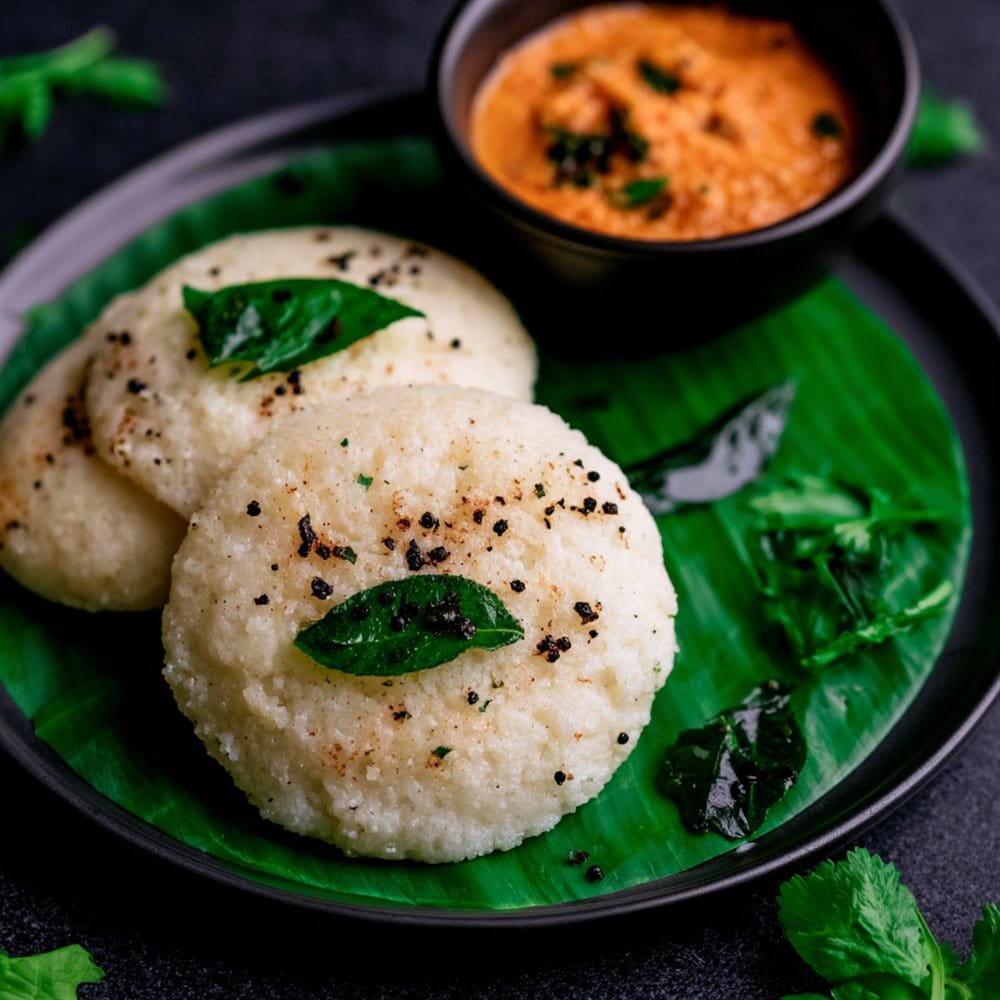
My father's mother — Paati, in Tamil family-speak — made idli every single morning of every visit I made to Madurai as a kid. The batter lived in a steel container in the corner of her kitchen, getting tangier with every passing day, and she'd ladle it into the molds at six in the morning with the steady efficiency of a person who'd been doing exactly this for fifty years. By the third morning of any trip, the batter had gone properly sour and the idlis were so good I'd eat six of them in a row, dipped in sambar with a small spoon of ghee melting on top. No chutney needed.
The thing about idli is that almost no part of it tastes like much on its own. Soft. Mild. Faintly sweet from the rice. Faintly sour from the fermentation. The point of an idli is not the idli — it's that it exists to be eaten with other things. Idlis want chutney. They want sambar. They want a small pile of podi (gunpowder, the spicy dal-and-chile mix) and a puddle of sesame oil to dip into. Eating an idli on its own is like eating a tortilla on its own. Technically possible. Mostly missing the point.
The batter needs to ferment overnight, which is the only part of the process that requires advance planning. Everything else is just timing. Make a big batch, steam a few in the morning, and tuck the rest in the fridge for the next two or three days. The batter only gets better with age — tangier, more complex, more sure of itself. The third-day idli is, in my opinion, the best one.
If forced to pick one breakfast to eat for the rest of my life, idli with sambar would be a serious contender. Paati would have rolled her eyes at this — sentimental nonsense — and asked if I'd been working too hard. Then she'd have made me another plate.
Cooking tips
Soaking the urad dal and rice separately keeps both textures right — the urad stays light and fluffy, the rice stays a little grainy.
Grinding the urad with cold water until it's airy and almost whipped-cream-like is the secret to that signature lift.
Fermenting at warm room temperature for 8 to 12 hours produces the tang and the rise that make idlis taste right.
Steaming for just 10 to 12 minutes — until a damp knife comes out clean — keeps them tender rather than rubbery.
Ingredients
- 1 cup whole white urad dal
- 2 cups idli rice (or parboiled rice)
- 1/2 teaspoon fenugreek seeds
- 1 teaspoon kosher salt
- Cool water, as needed
- Neutral oil, for greasing molds
Method
1. Soak
Wash the urad dal and fenugreek seeds together. Cover with water by 2 inches and soak 6 hours. Soak the rice separately, same way.
2. Grind the urad
Drain the urad. Grind with about 3/4 cup cold water until very smooth, light, and fluffy — almost like whipped cream. Scrape into a large bowl.
3. Grind the rice
Drain the rice. Grind with about 1/2 cup water until smooth but slightly grainy. Add to the urad batter.
4. Mix and ferment
Stir the batter with your clean hand for a minute (sounds odd, makes a difference). The consistency should be thick pancake batter. Add the salt, mix, and cover loosely. Sit at warm room temperature 8 to 12 hours, until doubled and bubbly.
5. Steam
Bring a few inches of water in your idli steamer to a boil. Grease the molds. Spoon batter into each just over halfway. Steam covered 10 to 12 minutes, until a damp knife comes out clean.
6. Serve
Cool 2 minutes before scooping out. Serve hot with coconut chutney, sambar, or both.
A note: Cold weather is the enemy of fermentation. If your batter isn't rising after 12 hours, give it another four somewhere warm — inside a turned-off oven with the light on usually does the trick. And if you can't be bothered with any of this on a particular week, the idli batter sold at every Indian grocery is a totally honest shortcut. Paati would NOT have approved. I use it anyway.