Rasam
A thin, peppery tamarind broth. Equal parts soup, digestive, and small comfort.
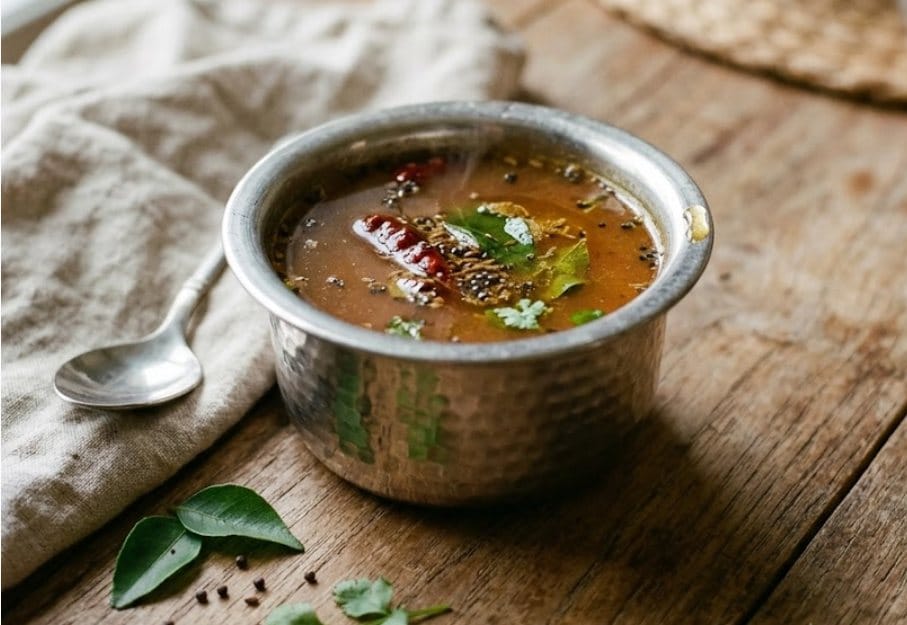
When I was small and got sick — fever, sore throat, generic kid misery — my mother would make me rasam. A thin, peppery, sour broth that you sip from a small steel bowl with a spoon, hot enough to lightly burn the tongue and clear the sinuses in one go. She insisted it was medicine, served with a small mound of rice and a wedge of lemon, and was very firm on the medicinal point. I think now she was probably right. Black pepper, garlic, tamarind, a hot broth — it's basically a Tamil version of a chicken-soup-for-the-soul argument.
Rasam is what you reach for when you're tired, when you're coming down with something, when you've finished a heavy meal and want a small, hot, sour thing to round it out. It's barely a recipe — black pepper, cumin, garlic, tamarind, tomato, water, and a tempering. Every grandmother has her own version. Every grandmother is correct. Arguing the point is a waste of everyone's time, and the rasam doesn't care.
I make this once or twice a week, almost reflexively, especially when the weather turns. It costs nothing, takes twenty-five minutes from start to finish, uses pantry staples that don't go bad, and produces a small bowl that fixes a surprising amount of what could be wrong with a given day. There's something deeply right about a dish that requires nothing from you and gives back so much.
The version below is straightforward and forgiving. Toast and grind the rasam powder fresh if you can — it really does make a difference — but if you're tired and the store-bought one is what's in the cabinet, use that. Once you've made it a couple of times, you'll start riffing. A little more pepper. A little less tamarind. Maybe a clove or two if you're being adventurous. Eventually you'll land on a version that's yours, and that's the version you'll keep coming back to.
Cooking tips
Toasting and grinding the rasam powder fresh (peppercorns, cumin, coriander, dried chiles, and garlic) makes a noticeable difference in flavor.
A gentle simmer — not a hard boil — preserves the bright tang of the tamarind and the warmth of the pepper.
Adding a little cooked toor dal gives the rasam more body without dulling its sharpness.
Pouring the hot tempering over the finished rasam at the end locks in the curry-leaf and mustard-seed aromatics.
Ingredients
For the rasam powder (or use 1 1/2 tbsp store-bought):
- 1 1/2 teaspoons black peppercorns
- 1 1/2 teaspoons cumin seeds
- 1 teaspoon coriander seeds
- 2 dried red chiles
- 1 garlic clove
For the rasam:
- 1 small lime-sized ball of tamarind (or 1 1/2 tablespoons paste)
- 1 1/2 cups hot water
- 1 ripe tomato, chopped
- 1/4 teaspoon turmeric
- 1 teaspoon kosher salt, plus more
- 2 cups more water
- 1/2 cup cooked toor dal (optional, for a slightly thicker rasam)
- Handful of cilantro, chopped
For the tempering:
- 1 tablespoon ghee
- 1/2 teaspoon mustard seeds
- 1/2 teaspoon cumin seeds
- 2 dried red chiles, broken
- 15 fresh curry leaves
- Pinch of asafoetida (hing)
Method
1. Make the rasam powder
In a dry skillet over medium heat, toast the peppercorns, cumin, coriander, and dried chiles for 1 minute, until fragrant. Cool slightly. Grind to a coarse powder with the garlic clove.
2. Soak the tamarind
Soak the tamarind in 1 1/2 cups hot water for 10 minutes. Squeeze to extract the pulp; discard the solids.
3. Build the broth
In a pot, combine the tamarind water, tomato, turmeric, salt, and rasam powder. Squish the tomato against the side. Bring to a gentle simmer over medium-low. Add 2 cups more water and the cooked dal, if using.
4. Simmer (don't boil)
Simmer 8 to 10 minutes, until the raw tamarind smell mellows and the kitchen smells like pepper. Don't boil hard — that flattens the flavor.
5. Temper
Heat the ghee in a small pan. Add the mustard seeds; when they pop, add the cumin, red chiles, curry leaves, and hing. Sizzle 20 seconds.
6. Finish
Pour the tempering over the rasam. Stir in the cilantro. Taste and adjust salt. Serve hot in small bowls, or over rice with a spoonful of ghee.
A note: Rasam should taste sour first, then peppery, then warm at the back of the throat. If yours tastes flat, it almost always needs more salt — much more than feels reasonable when you add it. Trust it. My mother salted hers more than I ever would have dared. She was correct about that, too.